Palacký University Olomouc
UP
Contact
CZ

Project: Junior Grant of Palacký University (no. JG_2023_003)
Project duration: 01/2023 to 12/2025
Principal grant receiver and project leader: Department of Geography (Faculty of Science UP), doc. Mgr. David Fiedor, Ph.D.
Project specification ♠ Project team and roles ♥ Project highlights ♦ Project results ♣ Conferences ♥ Publications and data
Gambling significantly affects many aspects of social reality and is therefore an issue that has long been the subject of various scientific disciplines. However, research to date has generally focused on "hard" forms of gambling (casino games, slot machines). In contrast, "soft" forms of gambling have, with a few exceptions, remained somewhat outside the scope of professional interest. Yet these are the most widespread and accessible forms of gambling. Our project aims to thoroughly understand the phenomenon of gambling, which poses varying degrees of social danger, in the context of real life, specifically in its geographical and psychological contexts. The main objective of the project is to identify, analyze, and interpret the degree of popularity, accessibility, and factors related to the risk of developing problem gambling in soft forms of gambling.
Ethical clearance for this project was granted by the Ethics Panel of the Faculty of Arts at Palacký University Olomouc (standard FF-B-20–02, registration number 02/2023).

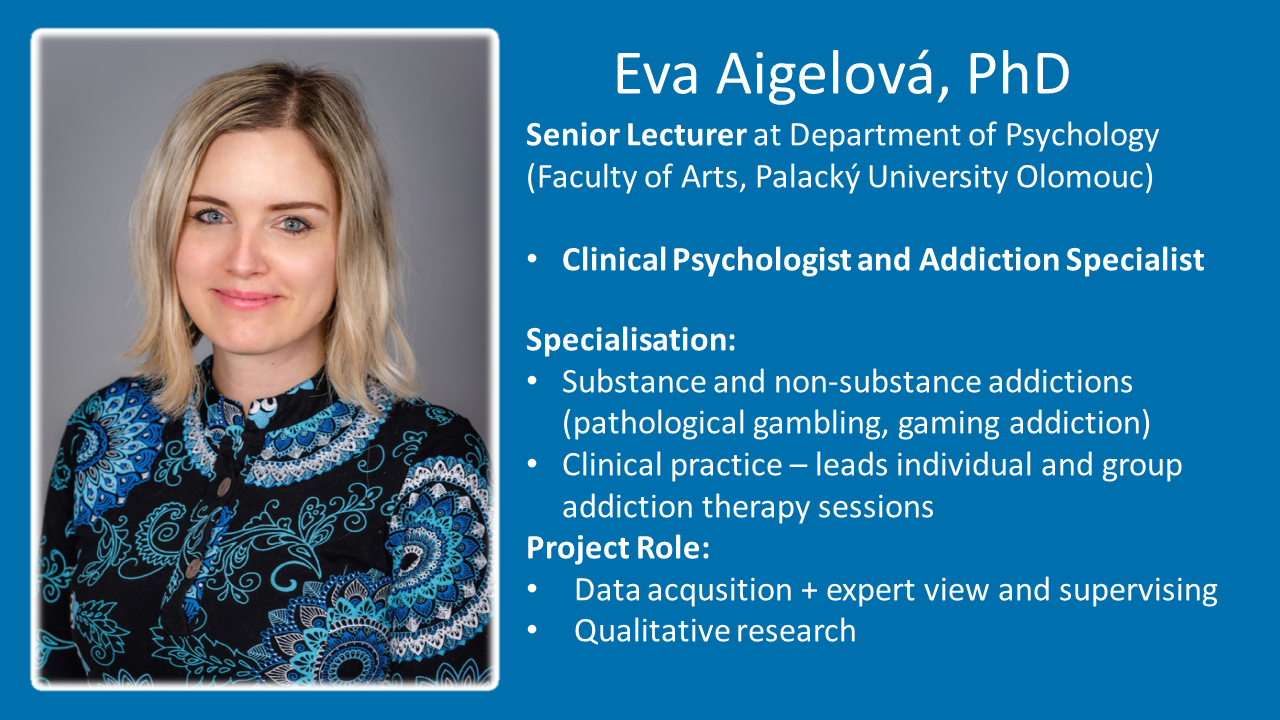


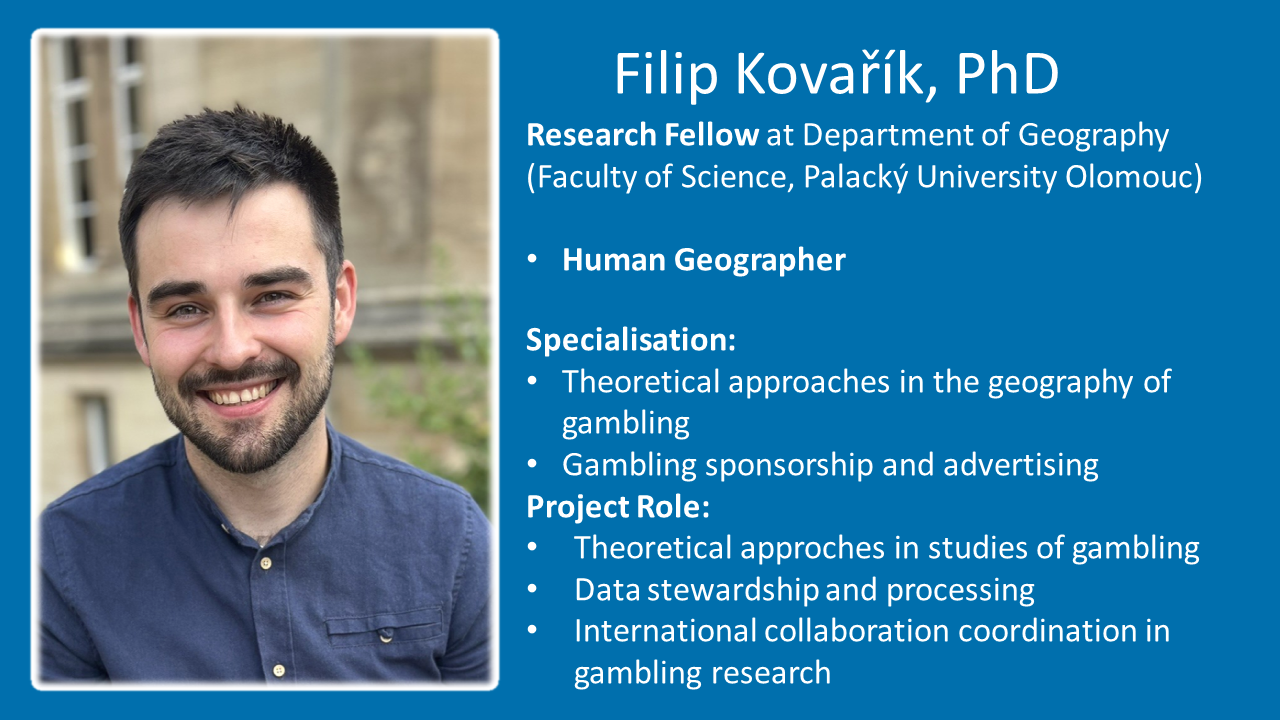
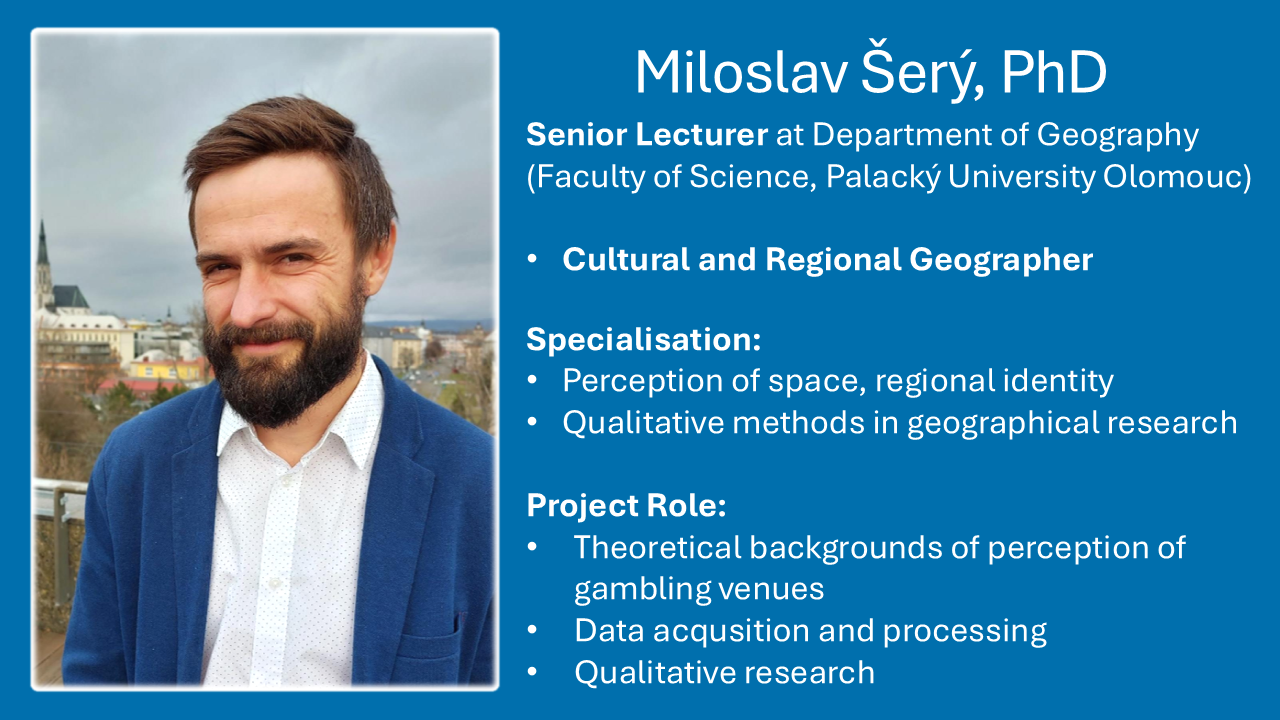
Interdisciplinarity: Within the project, we applied an interdisciplinary approach to the study of gambling, combining geography (i.e., a spatial perspective—the presence, concentration, and accessibility of gambling venues within individual municipalities and their perception by residents) and psychology (participation in gambling, attitudes toward gambling, and problem gambling). On this basis, a new research team composed of geographers and psychologists was formed.
Focus: Within the broad spectrum of gambling forms, we focused on the somewhat neglected issue of its soft forms, first conducting extensive research to identify which games the scientific community perceives as soft, i.e., associated with a lower risk of problem gambling. We also focused on how this issue is perceived by the public and by problem gamblers undergoing treatment.
Research territory: We used the Czech Republic as our "research laboratory", as it plays a key role in Europe in terms of gambling, whether in terms of the number of casinos per capita, the less negative attitude of the public towards gambling in general, or its significant regulation (whether at the state or local level). In our case studies, we focused on the Olomouc Region, which exceeds the Czech Republic's average in all aspects, particularly in terms of the number of different types of gambling establishments per capita.
Data: We used geographically localized data (geodata) on gambling venues and outlets (listed in the databases of the Ministry of Finance or on the websites of betting companies), questionnaire surveys (both paper and online), and structured interviews with problem gamblers in treatment. Three campaigns were carried out in this way:
Methods: In addition to traditional descriptive and inferential statistical methods for evaluating the collected data, we also used...
The results of our research have been published in scientific journals. Answers to the most important questions are provided in the following summaries (note: clicking on the question = summaries, clicking on the journal = original article). Some studies were also included in "knowledge/research snapshot" summaries by the Canadian non-profit organization Greo Evidence Insights (links to these summaries can be found under the individual studies).
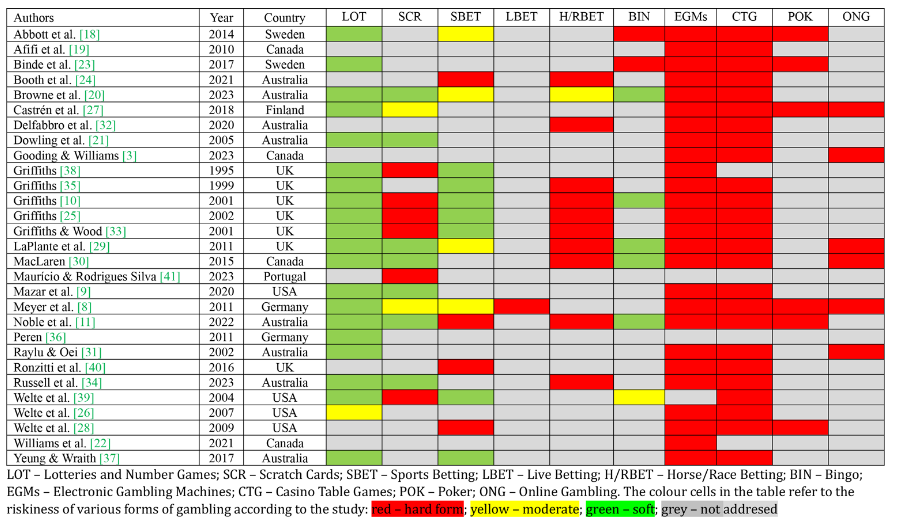
What exactly are soft forms of gambling? How can they be distinguished from hard forms? This is a fundamental question that is important not only for scholars, but also for politicians and gamblers themselves. The varying degrees of risk associated with different forms of gambling, in terms of the danger of developing a gambling problem, are reflected both in the legislation and regulations that are adopted and in the attitude of the public. Slot machine gambling is thus more regulated and viewed more negatively by the public than scratching paper lottery tickets.
Methods:
In our research, we focused on reviewing scientific articles that addressed the degree of risk associated with individual forms of gambling. Based on the selected parameters, we selected 3,381 articles from academic databases, of which 29 were found to be relevant for the final research. The studies in the sample, spanning from 1995 to 2024, reflected the current state of knowledge on the issue.
Results:
original article: Kovařík, F., Fiedor, D. (2025): Soft Forms and Hard Forms of Gambling: A Systematic Review with a Narrative Synthesis. Current Addiction Reports, 12(1), 42.
included in Greo knowledge snapshot
<< back to the list of results
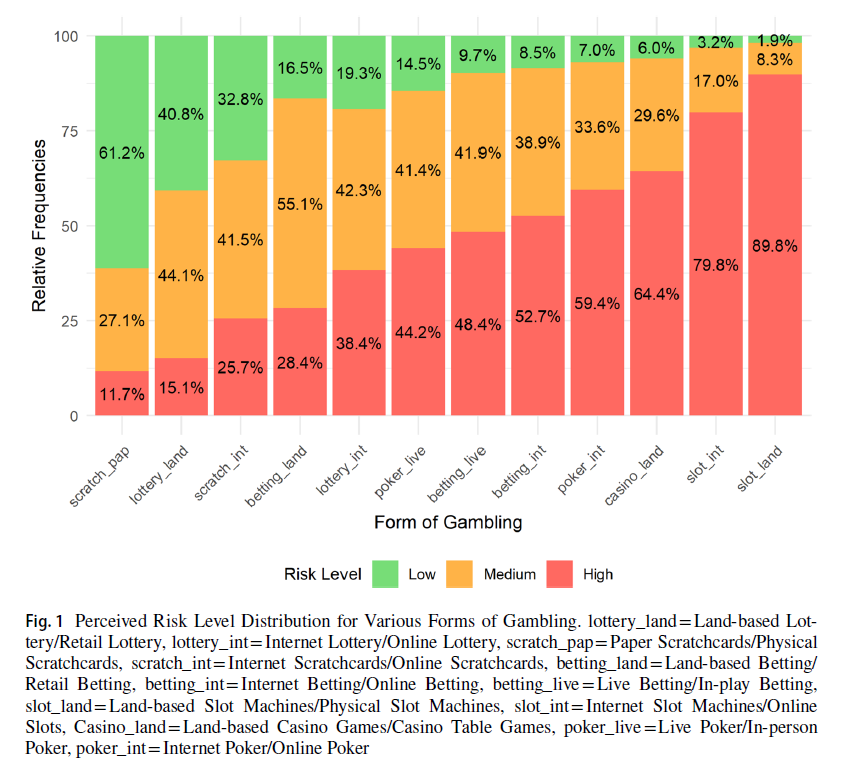
This study investigates perceived riskiness across different forms of gambling, with a particular focus on “soft” gambling activities such as lotteries and scratch cards. Conducted in the Czech Republic—a country with high gambling availability—the research addresses how public perceptions align with actual risk levels and explores the prevalence of problem gambling among players of less risky forms. The findings aim to inform prevention strategies and regulatory measures.
Methods:
A survey was administered to 2,498 adult respondents in the Olomouc region using both paper-based and online questionnaires. Participants assessed the perceived risk of 12 gambling forms on a three-point scale (low, medium, high) and reported their gambling experience across three timeframes: last month, last year, and lifetime. Problem gambling was screened using the PGSI Short Form, categorizing respondents into non-problem, low-risk, moderate-risk, and problem gambler groups. Data analysis included cluster analysis and exploratory graph analysis to group gambling forms by perceived risk.
Results:
original article: Fiedor, D., Charvát, M., Kovařík, F., Frajer, J., Aigelová, E., Šerý, M. (2025): Perceived Riskiness and Problem Gambling Across Different Forms of Gambling: A Focus on 'Soft' Gambling. Journal of Gambling Studies, 41(2).
included in Greo research snapshot
<< back to the list of results

This study examines the geography of gambling access in the Olomouc Region of the Czech Republic, a market characterized by high saturation of gambling opportunities. The research explores whether spatial accessibility to gambling venues influences participation, attitudes toward gambling, and problem gambling prevalence. Given the Czech Republic’s unique context—marked by historically high gambling availability—the findings provide insights into the relationship between physical access and gambling behavior.
Methods:
We employed GIS-based network analysis to calculate travel-time accessibility to four types of gambling venues: lottery outlets, betting shops, gambling halls, and casinos. Municipalities were clustered into four groups based on accessibility profiles. A questionnaire survey of 2,447 adult residents measured attitudes toward gambling (ATGS-8), participation in various gambling forms, and problem gambling severity using the PGSI short form. Data analysis included cluster comparisons and correlation tests
Results:
original article: Fiedor, D., Kovařík, F., Frajer, J., Šerý, M., Aigelová, E., Charvát, M. (2025): The geography of gambling access: Insights from a saturated central European market. GeoJournal, 90(6), 267.
<< back to the list of results
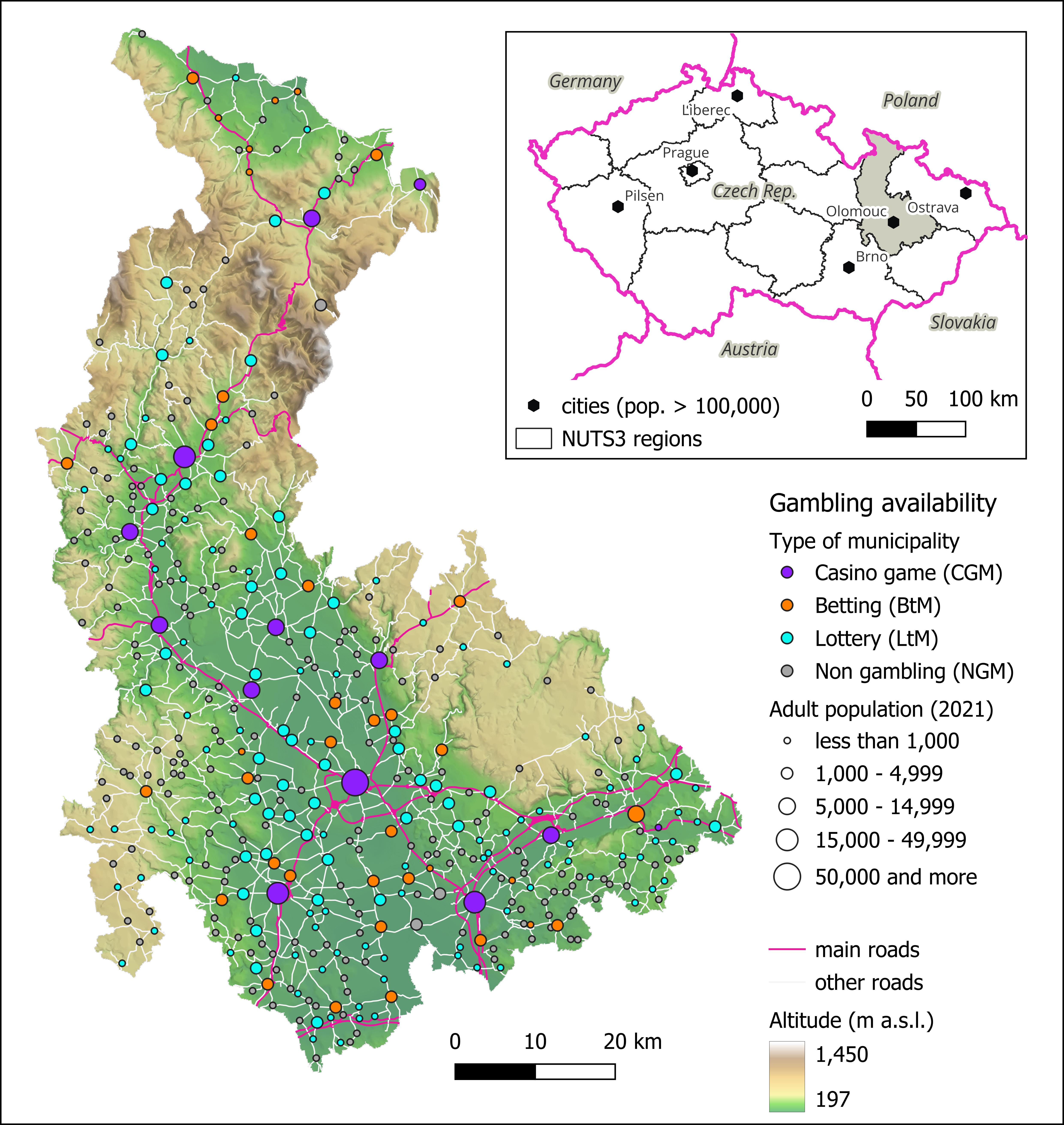
This study introduces an innovative approach to measuring gambling accessibility by focusing on daily encounters rather than mere availability of gambling venues. Conducted in the Olomouc Region of the Czech Republic, the research examines how routine exposure to gambling facilities during everyday movements influences participation and problem gambling. The findings aim to address methodological gaps in traditional spatial analyses and inform more effective regulatory strategies.
Methods
A survey of 2,447 adult respondents was combined with GIS-based mapping of gambling facilities, including casinos, gaming halls, sports betting shops, and lottery outlets. Accessibility was operationalized as the frequency of physical encounters with these venues during daily activities, such as commuting and shopping. Respondents reported their gambling experience and encounters, while problem gambling was assessed using the PGSI short form. Statistical analyses included chi-square tests, Kruskal–Wallis tests, and ordinal logistic regression.
Results
original article: Kovařík, F., Fiedor, D., Frajer, J., Šerý, M., Charvát, M., Aigelová, E. (2025): Daily Encounters as a Measure of Accessibility: An Innovative Approach to Assessing the Influence of Gambling Landscape on Gambler’s Behaviour. Journal of Gambling Studies, 41(3), 1247–1267.
included in Greo research snapshot
<< back to the list of results
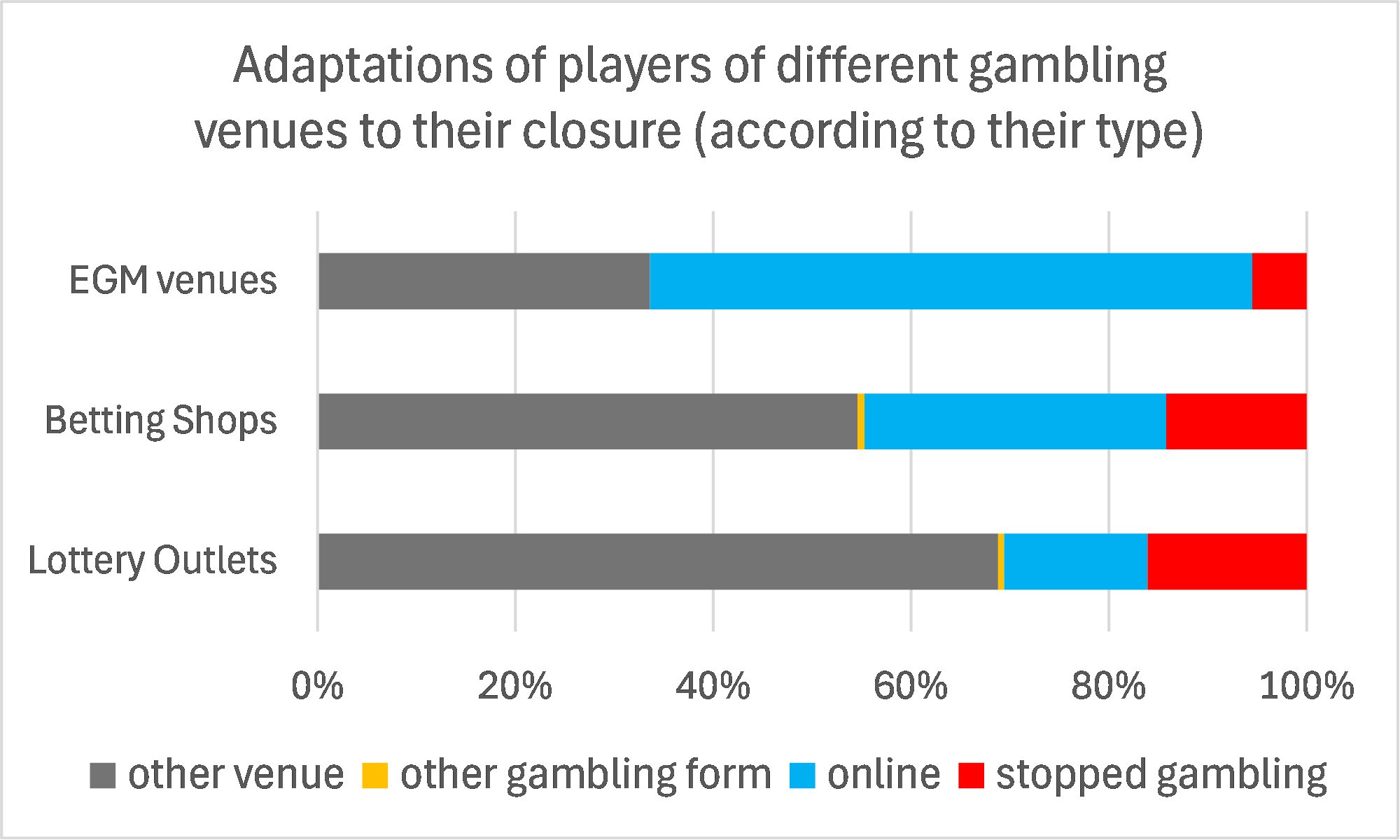
This study investigates how regular gamblers adapt to the reduction of land-based gambling venues in the Czech Republic. While regulatory strategies often aim to limit gambling availability as a harm-prevention measure, little is known about players’ behavioral responses to venue closures. Understanding these adaptive mechanisms is crucial for evaluating the effectiveness of environmental prevention and anticipating unintended consequences such as substitution effects.
Methods
An online survey was conducted among 1,503 regular gamblers (players who play at least once a month), focusing on three venue types: lottery outlets, betting shops, and electronic gambling machine (EGM) venues. Respondents reported lifetime experiences of venue closures and their subsequent adaptation strategies. Multinomial logistic regression was used to identify predictors of adaptation, including age, gender, gambling severity (PGSI), modality preference, municipality size, and local venue supply.
Results
original article: Kovařík, F., Fiedor, D., Frajer, J., Aigelová, E., Šerý, M., Charvát, M. (2025): Where to place my bets? Players’ adaptation to the reduction of gambling venues. Moravian Geographical Reports, 33(4), 198–208.
<< back to the list of results
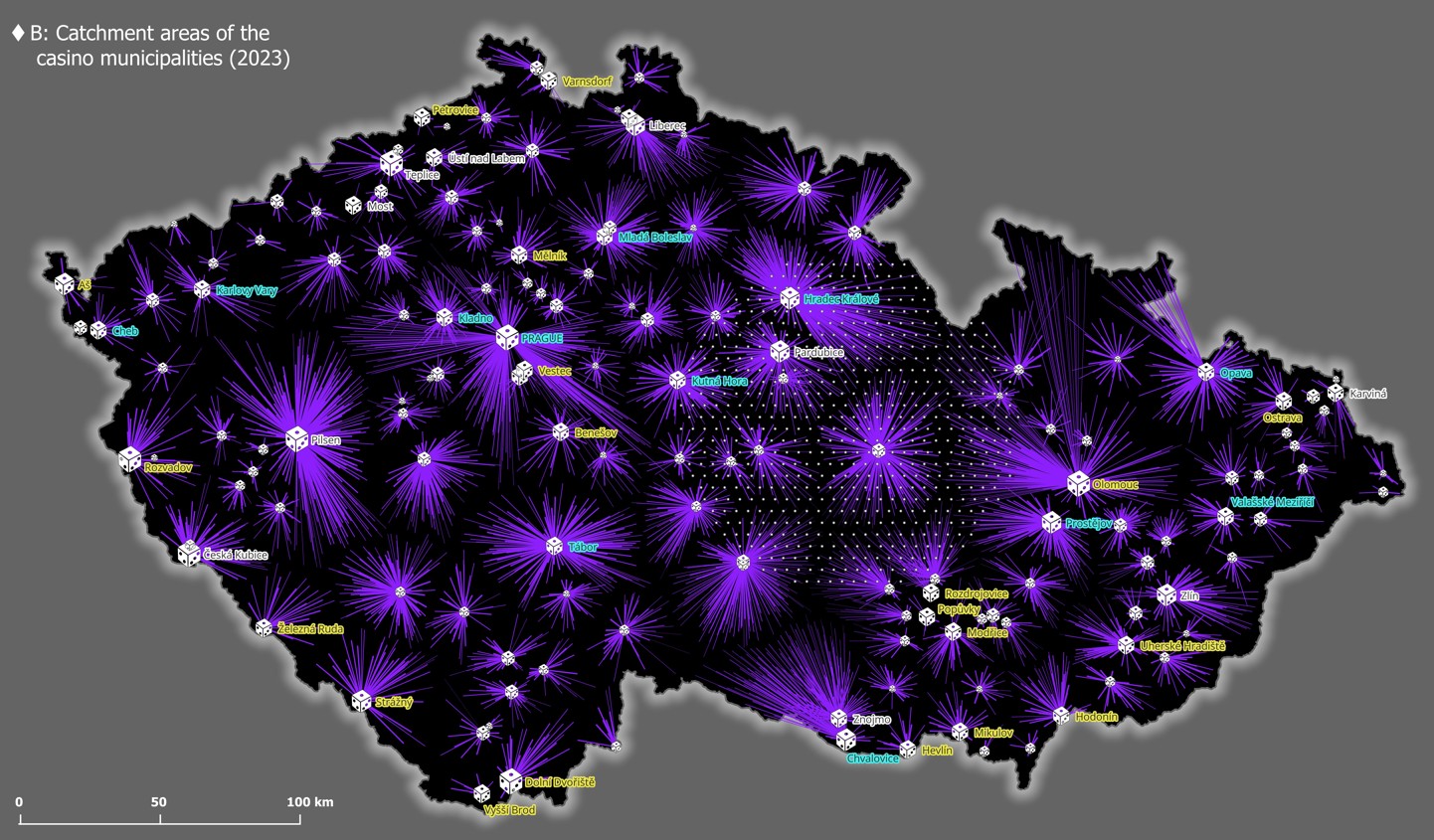
This study analyzes the spatial patterns of casino municipalities in the Czech Republic and the impact of the 2016 Gambling Act (effective from 2017) on their distribution and accessibility. The legislation aimed to reduce the availability of gambling by concentrating establishments and imposing stricter operational requirements. The research examines changes between 2017 and 2023 in the presence, accessibility, and catchment areas of casinos, providing insights into the effectiveness of regulations and regional disparities.
Methods
The analysis covered all 6,258 Czech municipalities using official data on licensed live gaming tables from the Ministry of Finance. Spatial and temporal accessibility was assessed through GIS-based network analysis and the Huff gravity model to delineate casino catchment areas. Additional socio-demographic data were integrated from the Czech Statistical Office. Changes in spatial concentration were measured using the Gini coefficient, and significant clusters were identified via SatScan.
Results
original article: Frajer, J., Fiedor, D., Kovařík, F., Šerý, M., Aigelová, E., Charvát, M. (2024): Changing ‘casinoscape’: spatial patterns of casino municipalities and impacts of the new gambling act in the Czech Republic. Journal of Maps, 20(1).
<< back to the list of results
Kovařík, F., Fiedor, D., Frajer, J., Aigelová, E., Šerý, M., Charvát, M. (2025): Where to place my bets? Players’ adaptation to the reduction of gambling venues. Moravian Geographical Reports, 33(4), 198–208. https://doi.org/10.2478/mgr-2025-0016 [link]
Fiedor, D., Kovařík, F., Frajer, J., Šerý, M., Aigelová, E., Charvát, M. (2025): The geography of gambling access: Insights from a saturated central European market. GeoJournal, 90(6), 267. https://doi.org/10.1007/s10708-025-11521-3 [link]
Kovařík, F., Fiedor, D., Frajer, J., Šerý, M., Charvát, M., Aigelová, E. (2025): Daily Encounters as a Measure of Accessibility: An Innovative Approach to Assessing the Influence of Gambling Landscape on Gambler’s Behaviour. Journal of Gambling Studies, 41(3), 1247–1267. https://doi.org/10.1007/s10899-025-10392-0 [link]
Kovařík, F., Fiedor, D. (2025): Soft Forms and Hard Forms of Gambling: A Systematic Review with a Narrative Synthesis. Current Addiction Reports, 12(1), 42. https://doi.org/10.1007/s40429-025-00656-5 [link]
Fiedor, D., Charvát, M., Kovařík, F., Frajer, J., Aigelová, E., Šerý, M. (2025): Perceived Riskiness and Problem Gambling Across Different Forms of Gambling: A Focus on 'Soft' Gambling. Journal of Gambling Studies, 41(2), https://doi.org/10.1007/s10899-024-10370-y [link]
Frajer, J., Fiedor, D., Kovařík, F., Šerý, M., Aigelová, E., Charvát, M. (2024): Changing ‘casinoscape’: spatial patterns of casino municipalities and impacts of the new gambling act in the Czech Republic. Journal of Maps, 20(1), 2387921. https://doi.org/10.1080/17445647.2024.2387921 [link]